by Greg Walcher, E&E Legal Senior Policy Fellow
As appearing in the Daily Sentinel
An “end run” was once a common football term, describing an offensive play in which the ball carrier runs around the end of the defensive line. But today it is more often used rhetorically to describe a strategic dodge, any maneuver to bypass, circumvent or sidestep. It’s more common in politics than in football.
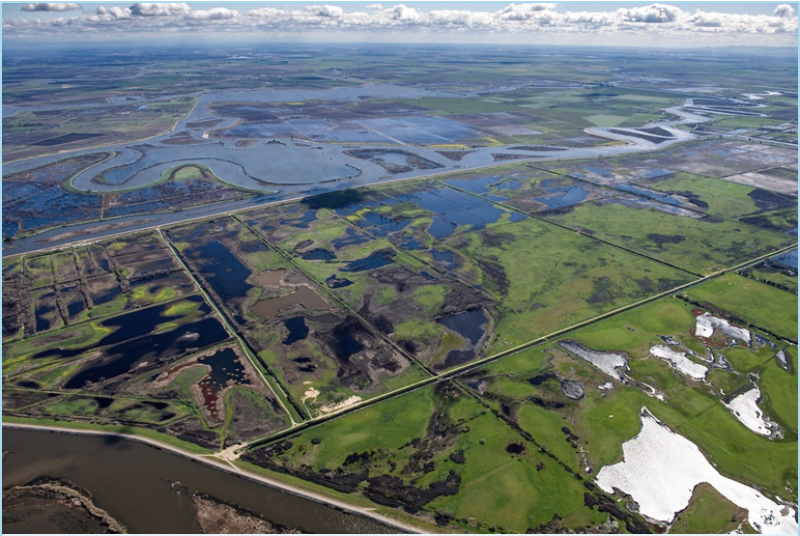
Many Westerners celebrated earlier this year when the Supreme Court finally declared once and for all that “Waters of the United States” (WOTUS) does not include every creek, pond, ditch, puddle and parking lot drain in the country. The EPA spent nearly a decade trying to use WOTUS as the regulatory tool for a vast expansion of federal jurisdiction, to include virtually all activity that touches any water, ignoring the plain language of the Clean Water Act of 1972, from which the WOTUS definition originates. It explicitly applies to America’s major rivers, bays and oceans — “navigable waters.”
With such a clear ruling from the nation’s highest court, might one expect the EPA to get over itself and move on? On the contrary, we have learned to expect an “end run” around the courts and the law, precisely what is now happening.
The Clean Water Act contains the phrase “waters of the U.S.” in 12 places. Nine of those use the phrase “navigable waters of the U.S.,” and the other three refer specifically to barges and the Gulf Inter-coastal Waterway. In the definitions section, “navigable waters” is defined as “waters of the U.S.,” meaning the terms are synonymous. There are no “waters of the U.S.” that are not navigable, under the law.