by Greg Walcher, E&E Legal Senior Policy Fellow
The Daily Sentinel
Police have an unflattering nickname, “Permit Patty,” for someone who calls police over frivolous complaints. It originated when a woman called the police on a little girl selling lemonade at a streetside stand — as generations of kids have done — without a permit. It illustrates a common-sense truth, namely that not everything in life should require a permit, and not every infraction is a matter for the police.
Most of us instinctively understand that, but the federal government never has. Virtually all government agencies operate from a top-down, command-and-control model that emphasizes enforcement over incentives. And most of them have a law enforcement division to make sure everyone complies with their edicts and rules. The federal government has more police than New York, Chicago, and Los Angeles combined. In fact, there are twice as many law enforcement officers in federal agencies than in America’s 25 largest cities combined — more than 200,000 federal cops.
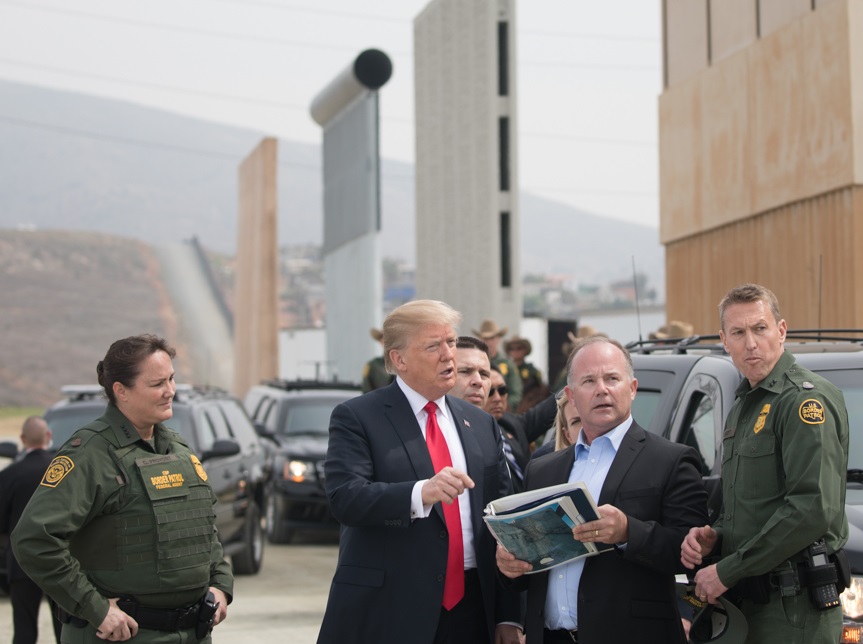
When President Trump announced that he was deploying active-duty troops to the southern border, not everyone applauded. He has sent 1,500 new troops to join 2,500 national guard and reservists already there, along with a few units sent by various states. Predictably, there was criticism of using the military to enforce laws inside the country — as if that hasn’t been done before. That debate is a sideshow, as a strong majority of Americans clearly understand the need to act on border security.
The more interesting discussion began at Trump’s first rally after taking office, in which he toyed with the idea of sending thousands of newly hired IRS agents to the border. The “Inflation Reduction Act” of 2022 authorized 88,000 new IRS agents, and it is unclear how many have already been hired, but Trump’s suggestion started a fascinating look into other law enforcement capability the government already has. The magnitude of that capability is mind-boggling.