
by Greg Walcher, E&E Legal Senior Policy Fellow
The Daily Sentinel
A Montana friend reminded me of an old cowboy adage: “Before you take down a fence, you ought to pause long enough to ask why it was put there.” It’s a principle called “Chesterton’s Fence,” coined by writer G.K. Chesterton who cautioned against acting rashly. He wrote, “a “modern reformer” says of the fence, “I don’t see the use of this; let us clear it away.” But someone more intelligent refuses until learning why it’s there.
It is the perfect analogy for today’s debate about removing dams, now a popular global trend. Chesterton’s 1929 book, “The Thing,” explains the logic that should prevail: “This paradox rests on the most elementary common sense. The gate or fence did not grow there. It was not set up by somnambulists who built it in their sleep. It is highly improbable that it was put there by escaped lunatics who were for some reason loose in the street. Some person had some reason for thinking it would be a good thing for somebody. And until we know what the reason was, we really cannot judge whether the reason was reasonable.”
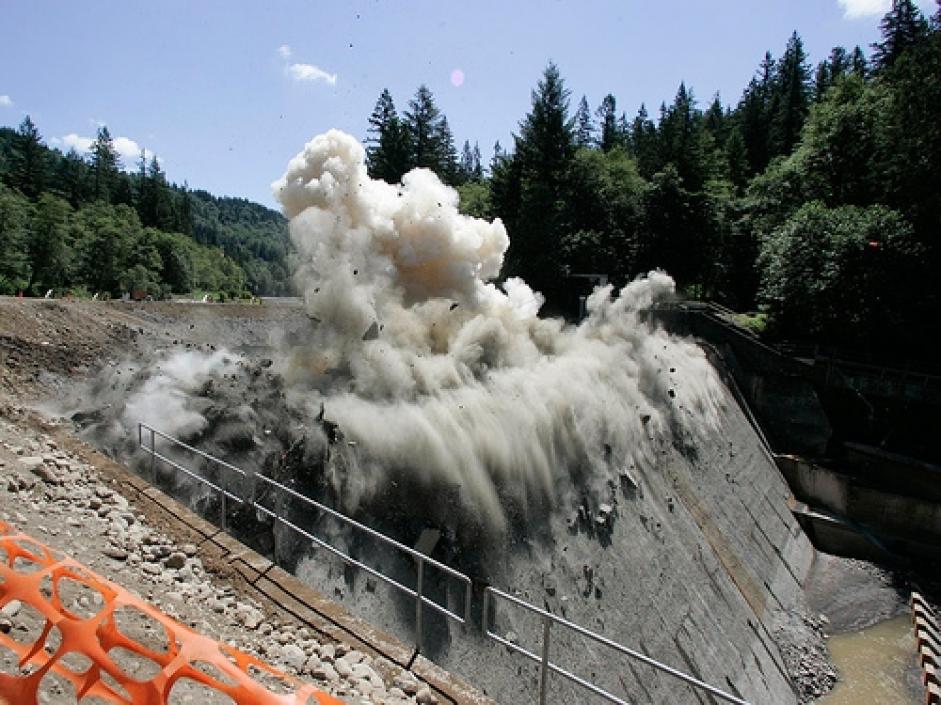
The dam removal craze began in the 1990s with Interior Secretary Bruce Babbitt, who famously boasted to a Trout Unlimited audience that he wanted to be the first “to tear down a really large dam.” In 1997, he personally wielded a sledgehammer on Quaker Neck dam in North Carolina, then on dams at Kennebec in Maine, on the Baraboo River in Wisconsin, the Rogue River in Oregon, Butte and Clear Creeks in California. There have been 100 others since then.
Babbitt’s allies set their sights on four Lower Snake River dams, hydroelectric projects called Ice Harbor, Lower Monumental, Little Goose and Lower Granite. The pressure intensified until 2024 when Washington’s governor signed an executive order requiring studies to find ways to replace the power those dams generate, so they could be torn down to benefit fish. Sierra Club President Carl Pope said, “If salmon are to survive climate change, four of these dams on the Lower Snake River must go.” Removal of those dams became a great cause and Congress will probably authorize it.


