
by Katy Grimes, E&E Legal Senior Media Fellow and California Globe Editor
As Appearing in the California Globe
What if the policies promising ‘equity’ in America’s schools are actually hurting the very students they claim to help?
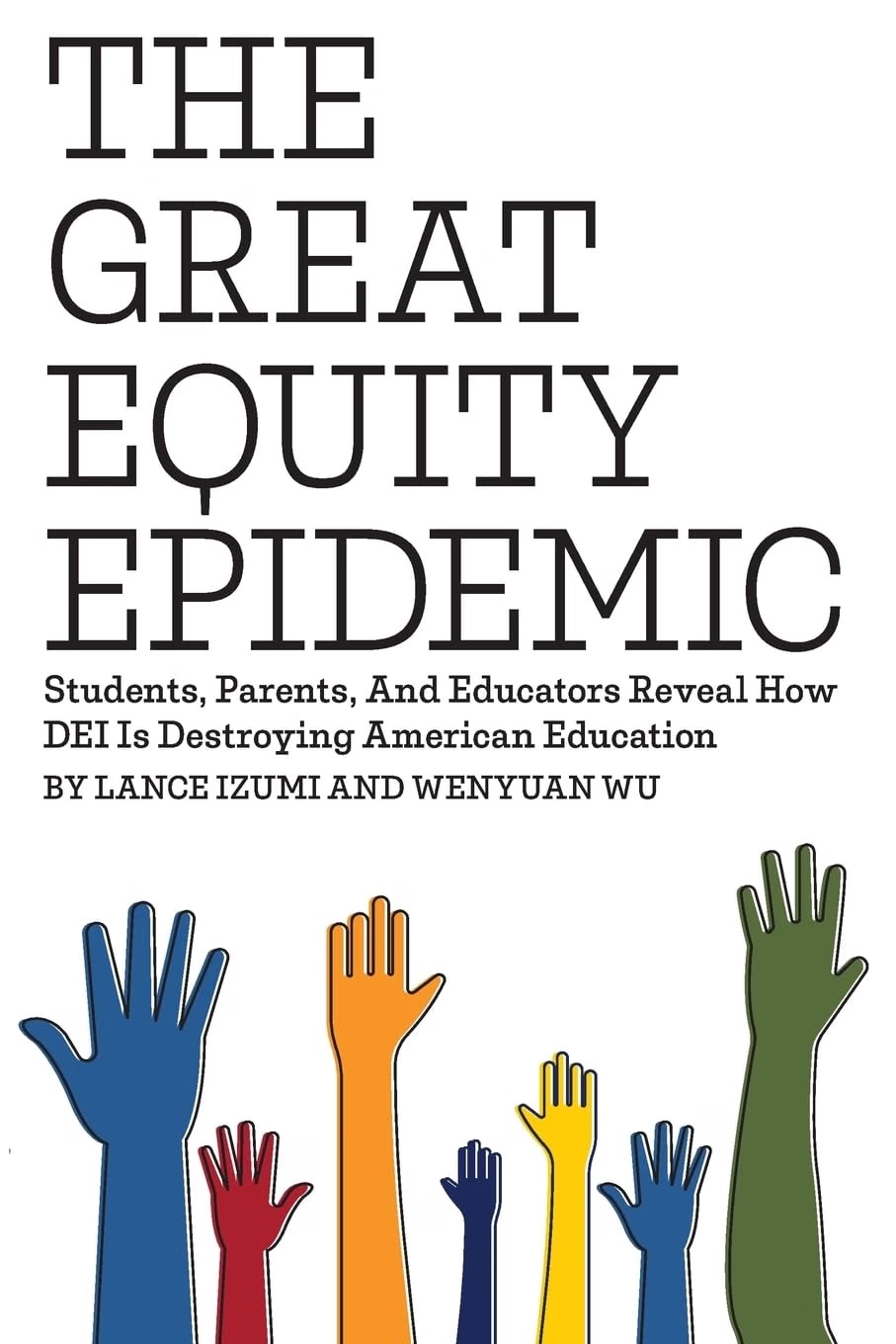
The Great Equity Epidemic by chronicles resolute Americans challenging controversial DEI and “Equity” policies in K-12 and higher education.
California’s high school graduates can’t read at grade level, and many can’t even read at middle school level. A quarter of California’s students can’t even do basic math. Yet they are “graduating” with high GPAs unheard of in previous years – perhaps to compensate?
This book collects first-hand accounts of students, parents, teachers, school-board members, and professors who pushed back against what the authors describe as “equity” policies in K-12 and higher education. These policies, in the authors’ view, prioritize equal outcomes over equal opportunity, leading to lowered academic standards, reduced recognition for high achievers, weakened discipline, race-based treatment of students, and the injection of political ideology into classrooms, according to Pacific Research Institute.
The Great Equity Epidemic however, is not just another book about what has gone wrong in public education – it’s about real people who fought back-and won.
In a National Review op-ed, Izumi, the Senior Director of PRI’s Center for Education, explains in more detail:
Diversity, equity, and inclusion (DEI) policies, have become embedded in American education despite President Trump’s efforts to eliminate them and some schools’ attempts to rebrand them. A 2025 investigation found that nearly 24,000 schools in 46 states and the District of Columbia were implementing DEI through policies, strategic plans, or practices, affecting more than 14.6 million students.
Equity in education has come to mean something very different from equal opportunity. Rather than giving every student the same opportunity to succeed based on merit and hard work, equity increasingly focuses on producing equal outcomes, even when doing so means changing grading, discipline, curriculum, and academic expectations.